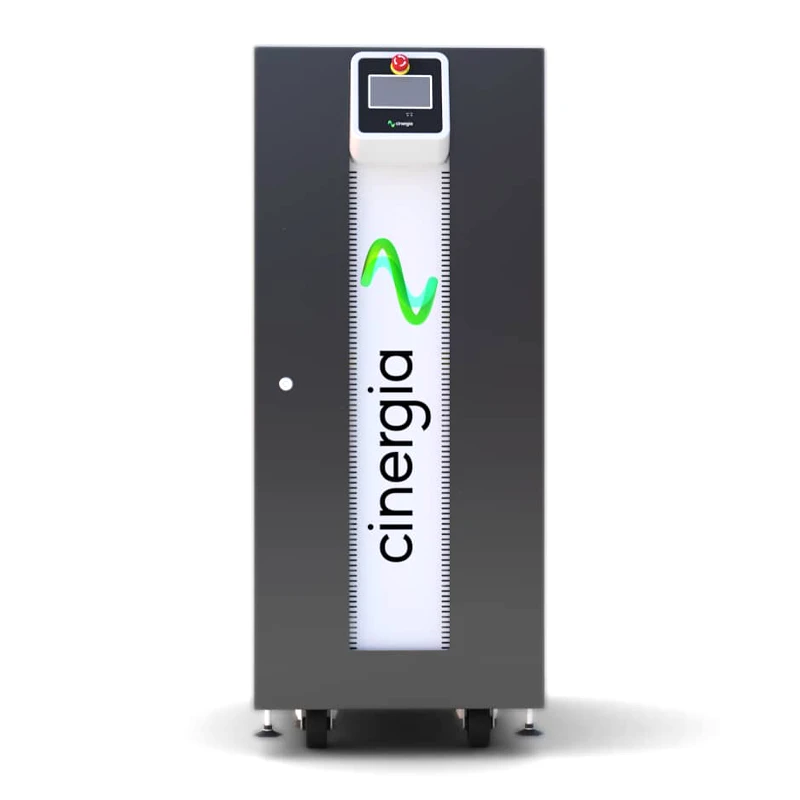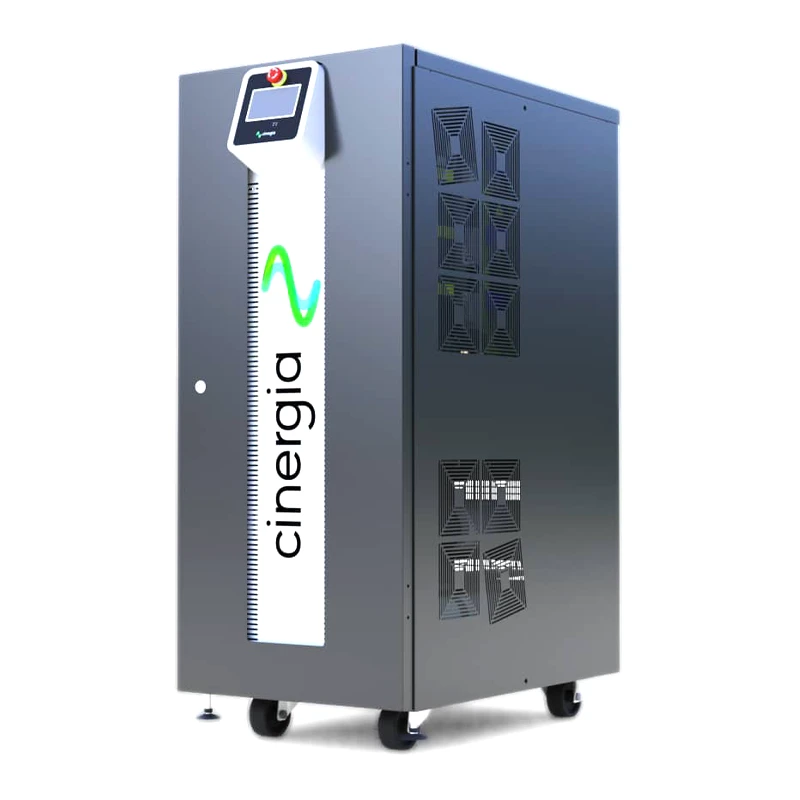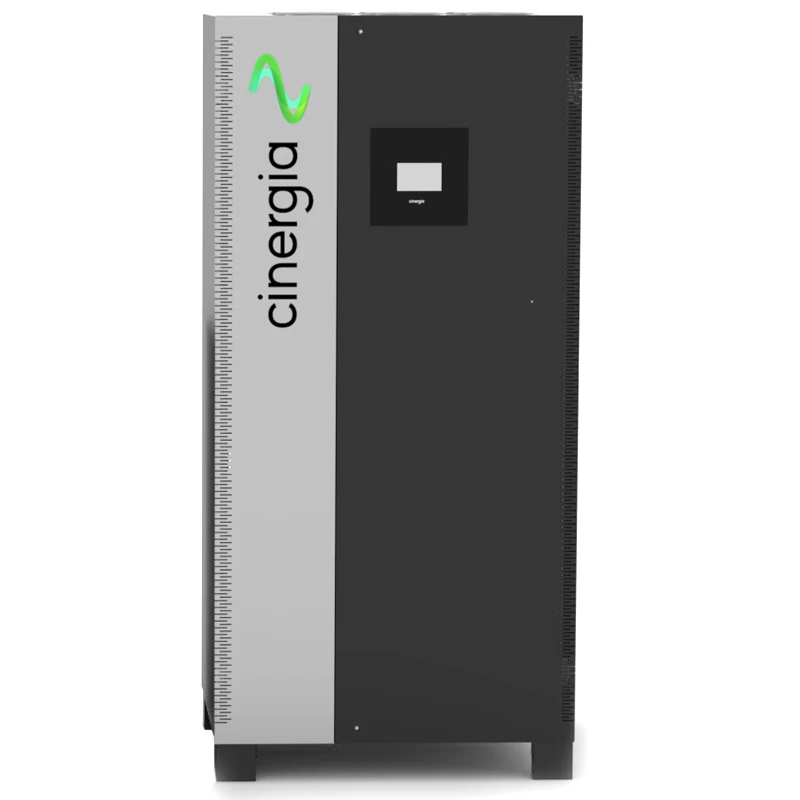
The Cinergia B2C+ ePlus series is a modular, bidirectional and fully regenerative DC test platform designed for maximum flexibility and energy efficiency. The devices can operate both as a precise DC source and as an electronic load, allowing energy to flow in both directions. By feeding the energy back into the grid, energy consumption is reduced, operating costs are lowered and sustainability is increased. With a power factor > 0.98 and a THDi < 3 %, the series meets the strictest requirements for grid quality.
Typical fields of application include battery testing and emulation, PV emulation, charging infrastructure testing, DC/DC and DC/AC converter testing, smart grid validation, avionics, traction systems and power-hardware-in-the-loop (P-HiL). The series covers a power range from 7.5 kW to 200 kW, with a standard voltage window of 20 – 800 V DC. Combinations of up to 1,500 V DC or over 1 MW of power can be realized via master/slave coupling.
Model in focus: B2C+7.5 (7.5 kW)
The B2C+7.5 is the most compact model in the B2C+ ePlus series and offers maximum precision in the smallest of spaces. It has been specially developed for research laboratories, development environments and test applications with limited power requirements. Despite its compact design, it offers the full range of functions and software architecture of the entire series.
- Voltage range: 20 – 800 V DC
- Nominal power: 7.5 kW
- Current capability (3-channel, unipolar, 2Q): ±10 A per channel
- Current capability (1-channel, unipolar, 2Q): ±30 A total
- Current capability (bipolar, 4Q): ±10 A
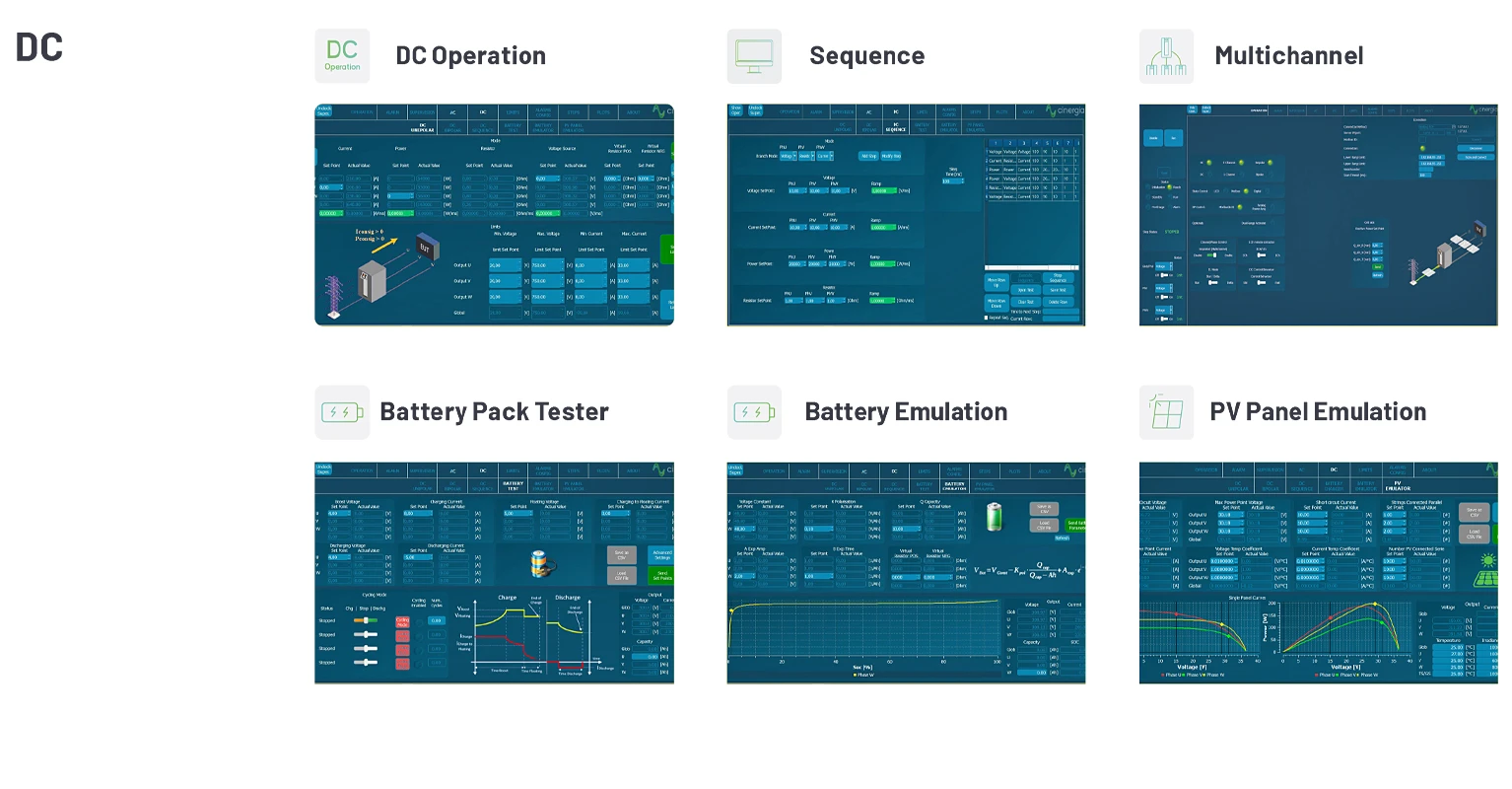
- Operating modes: CV, CC, CP, CR, Power-Amplifier (P-HiL), Steps/Sequencer, Battery Pack Testing (incl.), optional battery & PV emulation
Technical classification compared to other models
The B2C+7.5 is the entry-level model in the series and is ideal for applications where precision, efficiency and compact design are crucial. With a current capability of ±30 A in 1-channel mode, it is ideal for smaller battery stacks, DC/DC converters, network simulation tasks and research tests in the lower power range.
Compared to larger models such as the B2C+10 (±45 A) or B2C+15 (±67.5 A), it offers lower current reserves, but the same range of functions, the same user interface and identical communication interfaces. This makes it ideal as an entry into the B2C+ platform or for laboratory environments with limited grid connection power.
Product features of the series:
- Bidirectional & regenerative: Energy flow in both directions with backfeed into the grid to increase efficiency.
- Grid-friendly: THDi < 3 % and power factor > 0.98 at rated power.
- Power portfolio: 13 models from 7.5 kW to 200 kW; standard 20 – 800 V DC.
- Overload capacity: up to 200 % short-term; 150 %/1 min, 125 %/10 min; DC overcurrent up to 110 % for 1 min.
- Multi-channel concept: 3 independent DC channels (2Q) or 1 channel with triple current capability; optional 4Q operation (bipolar).
- Parallel connection & series connection: Master/slave up to 8 units; parallel, series or series/parallel for more power or up to 1.500 V DC.
- Operating modes: CV, CC, CP, CR, Power-Amplifier (P-HiL), Steps/Sequencer; Battery Pack Testing included; optional battery and PV emulation.
- Fast dynamics: Step response typ. 1–2.5 ms (depending on mode and setpoint).
- Operation & software: 4.3" touch, Windows GUI with sequence editor, CSV import and data logging with 400 ms resolution.
- Interfaces: Ethernet/Modbus-TCP, isolated analog/digital I/Os; optional RS485, CAN/RS232 (via gateway); P-HiL compatible.
- Safety: Emergency stop, interlock signals, freely configurable alarms and limits, comprehensive protection functions (OV/OC/OL, short circuit, watchdog, etc.).
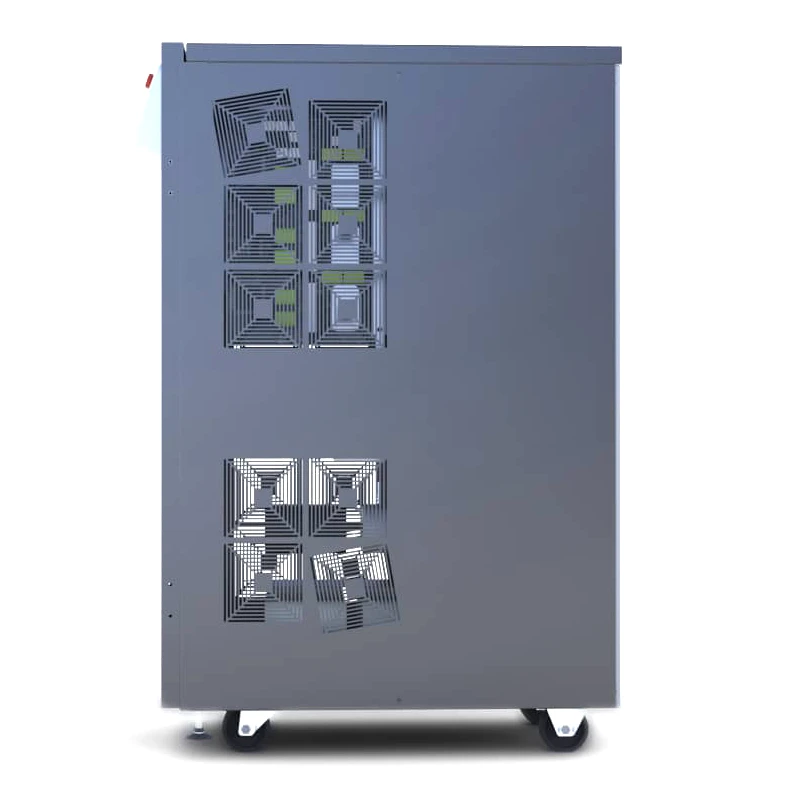
- Efficiency & cooling: = 89 % (7.5–10 kW); forced air cooling for reliable continuous operation.
- Measurement parameters: Mains U/I/P/f; output U/I/P (rms/avg), DC link, temperature monitoring; data logging via FTP.
- Standards & Conformity: CE; Safety EN-50178/EN-62040-1; EMC EN-62040-2; RoHS.
- Options: Battery emulation, PV emulation, insulation monitoring (IT grids), anti-islanding (grid-feeding), low-ripple capacitance, 30 kHz switching frequency (model-dependent).