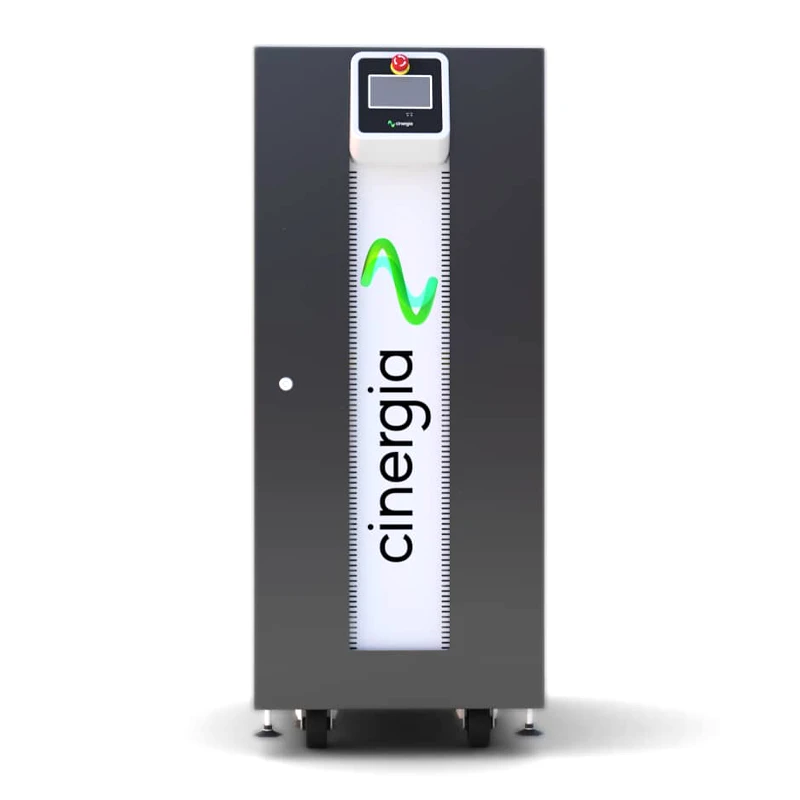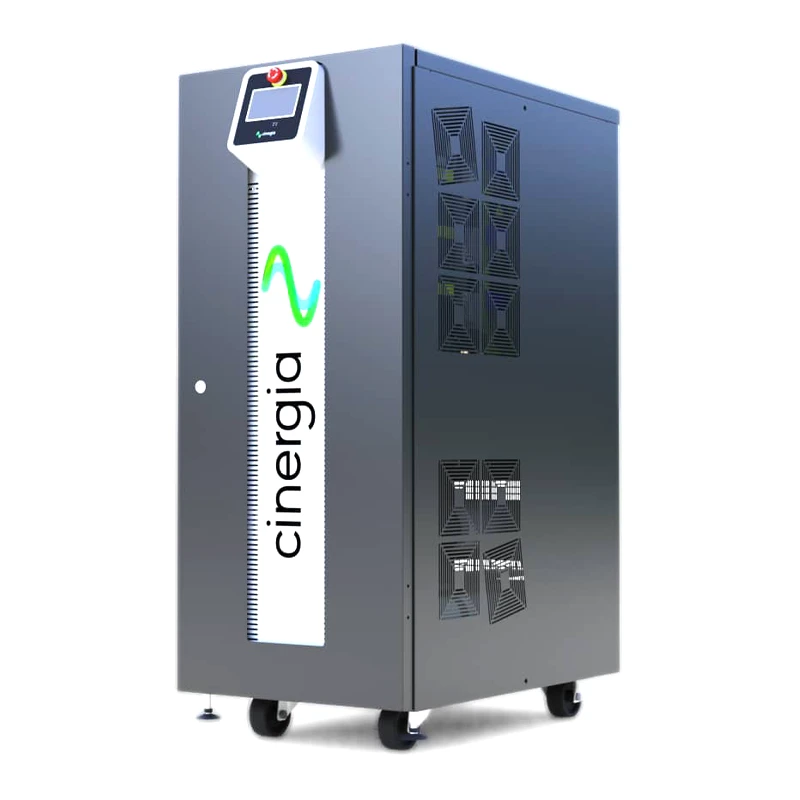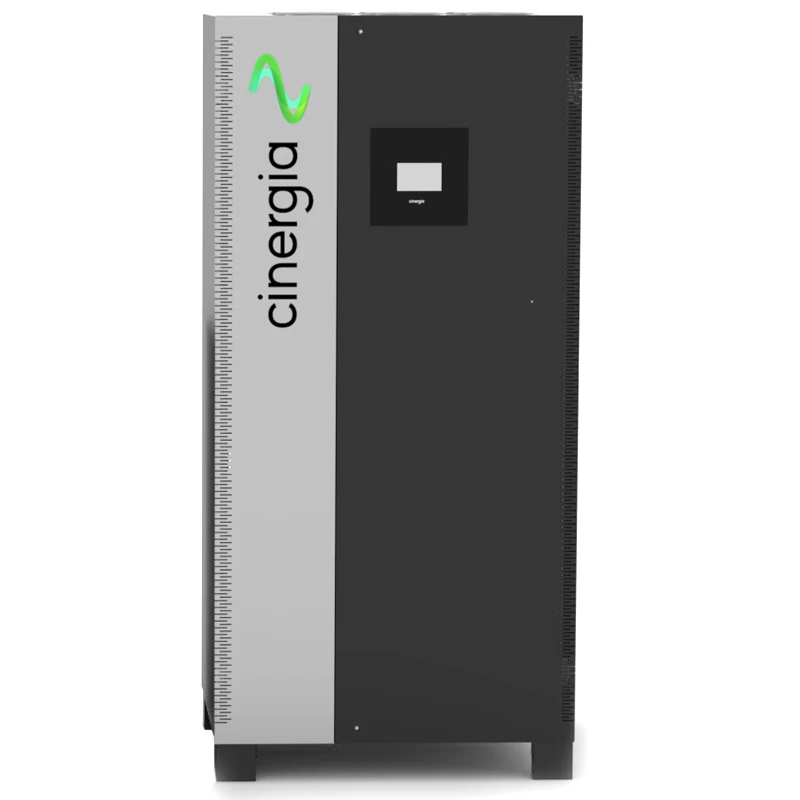
The Cinergia B2C+ ePlus series is a universal, bidirectional and fully regenerative DC test platform that can both absorb energy and feed it back into the grid. It works as a precisely controllable source or electronic load and impresses with the highest energy efficiency (= 92 %) as well as outstanding grid quality with THDi < 3 % and power factor > 0.98.
The devices in the series are used in numerous applications – including battery testing and emulation, energy storage characterization, DC/DC and DC/AC converter testing, charging infrastructure testing, traction systems, avionics, smart grid validation and in power hardware-in-the-loop (P-HiL) environments. The modular design covers outputs from 7.5 kW to 200 kW at 20 – 800 V DC. System expansions up to 1,500 V DC or over 1 MW of power are possible via master/slave coupling.
Model in focus: B2C+50 (50 kW)
The B2C+50 is a versatile high-performance model from the B2C+ ePlus series and offers an optimum combination of current capacity, dynamics and power supply capability. With an output of 50 kW, it is ideal for medium to large test benches and demanding development applications - for example for battery modules, DC/DC converters or energy storage systems.
- Voltage range: 20 – 800 V DC
- Nominal power: 50 kW
- Current capability (3-channel, unipolar, 2Q): ± 66 A per channel
- Current capability (1-channel, unipolar, 2Q): ± 200 A total
- Current capability (bipolar, 4Q): ± 66 A
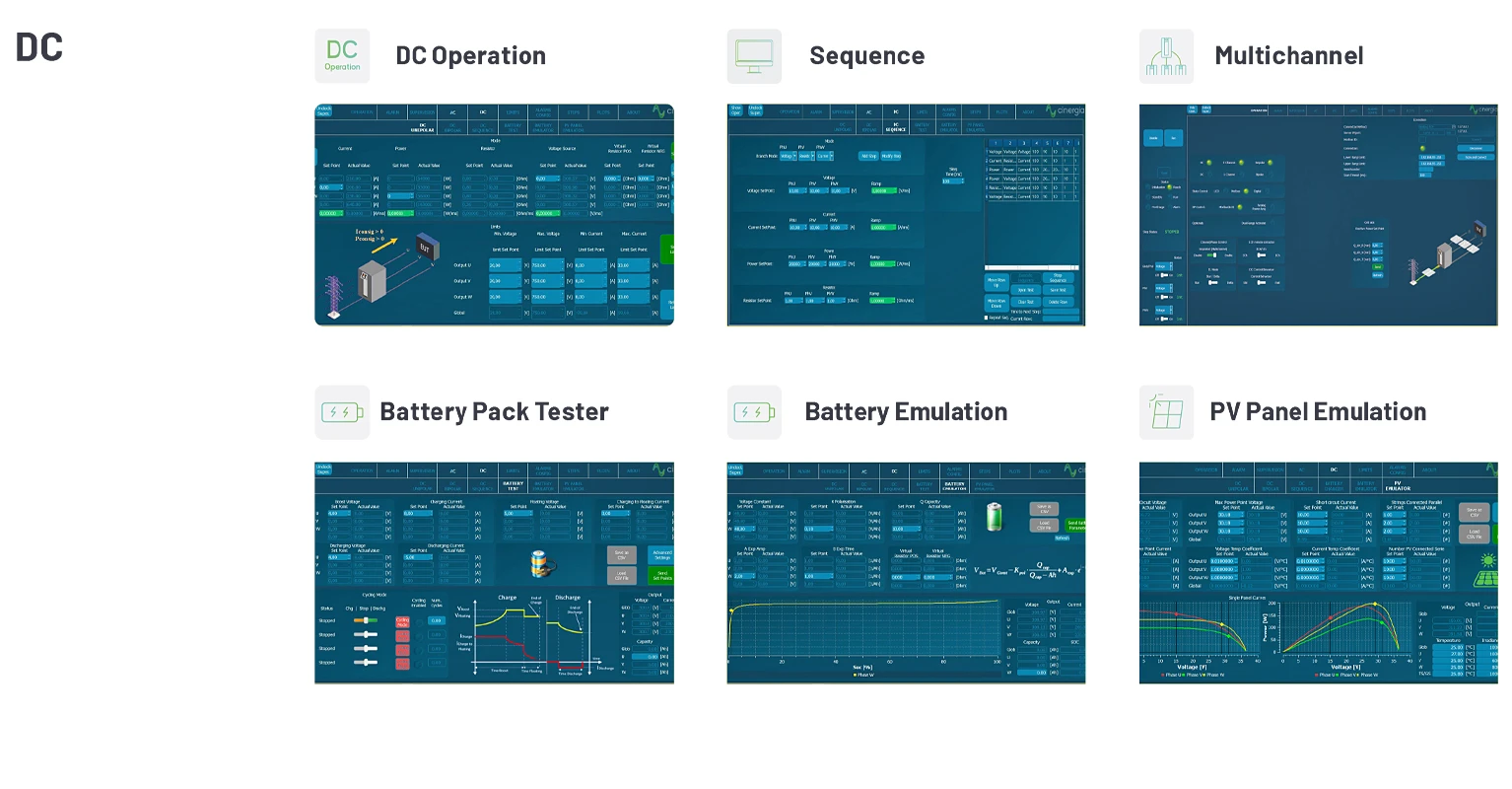
- Operating modes: CV, CC, CP, CR, Power-Amplifier (P-HiL), Steps/Sequencer, Battery Pack Testing (incl.), optional battery & PV emulation
Technical classification compared to other models
The B2C+50 closes the gap between the B2C+40 (± 160 A) and the B2C+60 (± 225 A) and offers more power reserve while maintaining high energy efficiency. It is aimed at users who are looking for a robust, high-precision solution for energy and battery tests in the upper medium power range.
Compared to the smaller devices in the series (e.g. B2C+30 or B2C+20), the B2C+50 delivers significantly higher continuous currents, but remains compact enough for laboratory use. Compared to high-performance variants such as the B2C+100 or B2C+120, it offers lower connected load with almost identical control architecture, making it perfect for integration into modular test systems.
Product features of the series:
- Bidirectional & regenerative: Energy flow in both directions with reverse feed into the grid to increase efficiency and reduce costs.
- Grid-friendly: THDi < 3 % and power factor > 0.98 at rated power.
- Power portfolio: 13 models from 7.5 kW to 200 kW; standard 20 – 800 V DC.
- Overload capacity: up to 200 % short-term; 150 %/1 min, 125 %/10 min; DC overcurrent up to 110 % for 1 min.
- Multi-channel concept: 3 independent DC channels (2Q) or 1 channel with triple current capability; optional 4Q operation (bipolar).
- Parallel connection & series connection: Master/slave up to 8 units; parallel, series or series/parallel for more power or up to 1,500 V DC.
- Operating modes: CV, CC, CP, CR, power amplifier (P-HiL), steps/sequencer; battery pack testing included; optional battery and PV emulation.
- Fast dynamics: Step response typ. 1–2.5 ms (depending on mode and setpoint).
- Operation & software: 4.3" touch, Windows GUI with sequence editor, CSV import and data logging (400 ms resolution).
- Interfaces: Ethernet/Modbus-TCP, isolated analog/digital I/Os; optional RS485, CAN/RS232 (via gateway); P-HiL compatible.
- Safety: Emergency stop, interlock signals, configurable alarms and limits, comprehensive protection functions (OV/OC/OL, short circuit, watchdog, etc.).
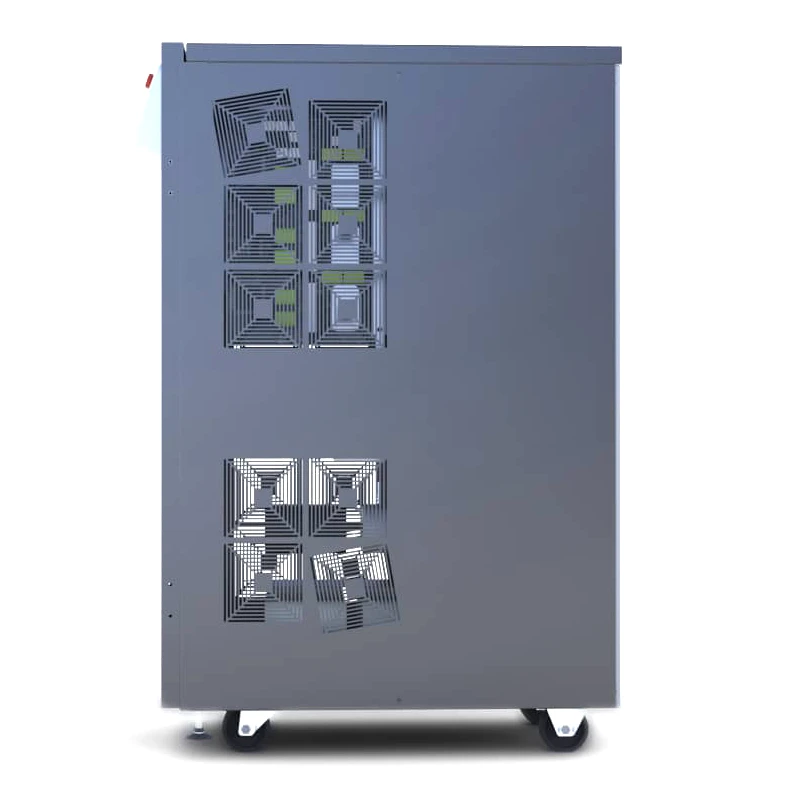
- Efficiency & cooling: = 92 % (40 – 200 kW); forced air cooling for thermally stable continuous operation.
- Measured variables: Mains U/I/P/f; output U/I/P (rms/avg), DC link, temperatures; data logging via FTP.
- Standards & Conformity: CE; Safety EN-50178/EN-62040-1; EMC EN-62040-2; RoHS.
- Options: Battery emulation, PV emulation, insulation monitoring (IT grids), anti-islanding (grid-feeding), low-ripple capacitance, 30 kHz switching frequency (model-dependent).