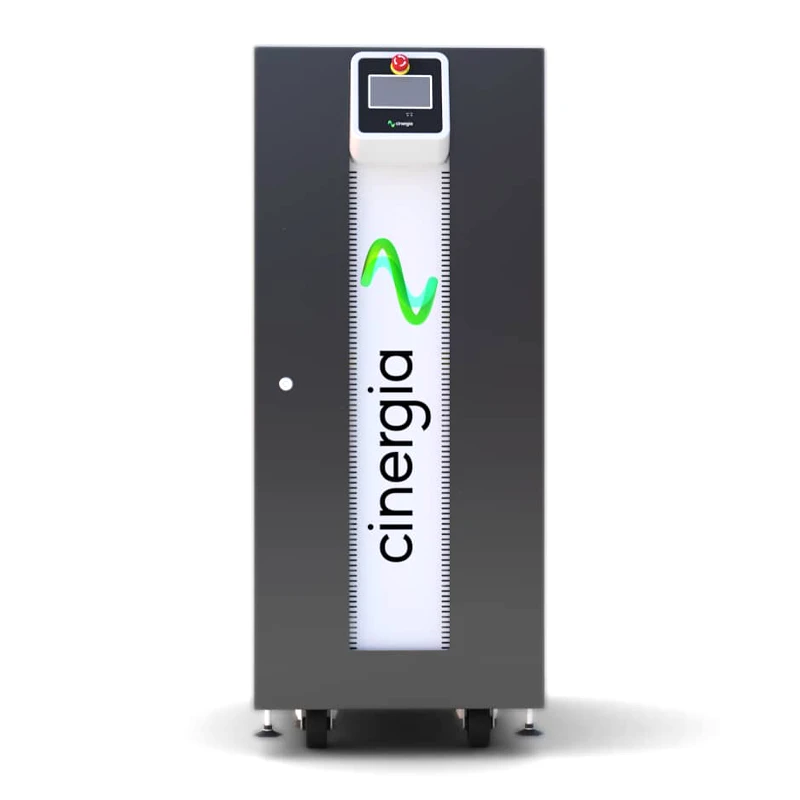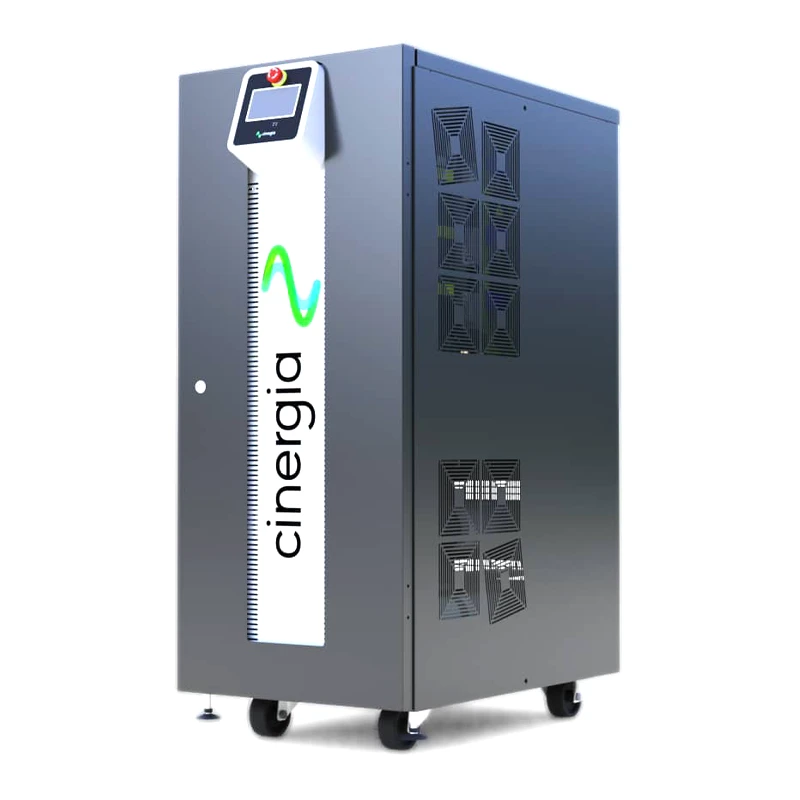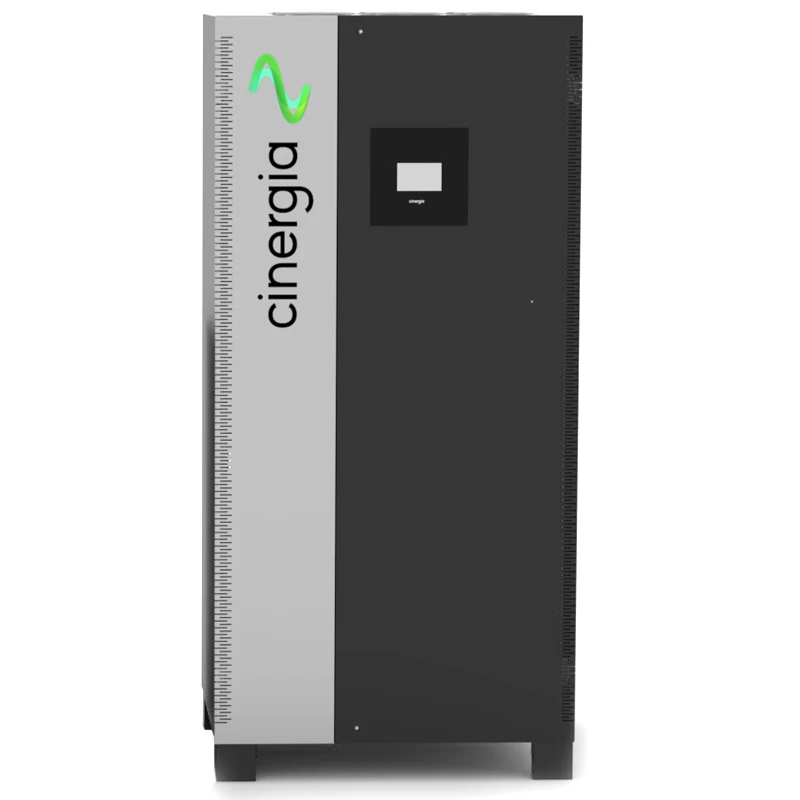
The Cinergia B2C+ ePlus series is a modular, bidirectional and fully regenerative DC test platform designed for modern development, research and production environments. It works both as a source and as an electronic load and efficiently feeds excess energy back into the grid. With a power factor > 0.98 and THDi < 3 %, it combines energy efficiency with the highest grid quality.
Typical fields of application include battery testing and emulation, energy storage characterization, charging infrastructure tests, DC/DC and DC/AC converter development, traction systems, smart grid simulations, avionics and power-hardware-in-the-loop (P-HiL). The series comprises 13 models from 7.5 kW to 200 kW and covers 20 – 800 V DC as standard. System expansions up to 1,500 V or over 1 MW power are possible via master/slave coupling.
Model in focus: B2C+60 (60 kW)
The B2C+60 is the ideal high-performance model for demanding industrial and research-related applications where high currents, precise control and reliable power supply are required. With a rated output of 60 kW, it combines efficiency, flexibility and power for medium to large-scale applications.
- Voltage range: 20 – 800 V DC
- Nominal power: 60 kW
- Current capability (3-channel, unipolar, 2Q): ±75 A per channel
- Current capability (1-channel, unipolar, 2Q): ±225 A total
- Current capability (bipolar, 4Q): ±75 A
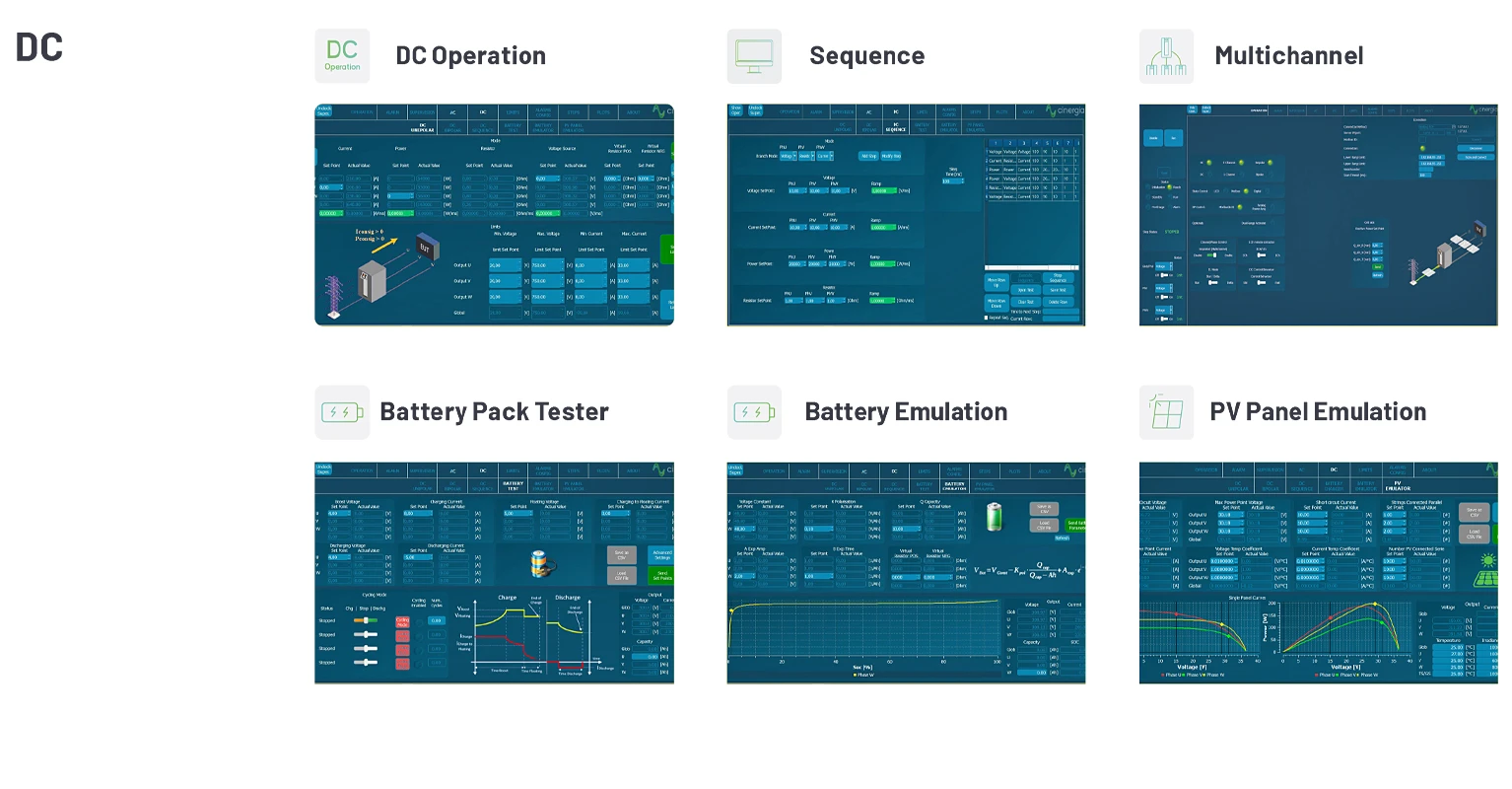
- Operating modes: CV, CC, CP, CR, Power-Amplifier (P-HiL), Steps/Sequencer, Battery Pack Testing (incl.), optional battery & PV emulation
Technical classification compared to other models
The B2C+60 is in the upper mid-range of the series and represents a powerful transition from compact laboratory solutions to industrial high-performance devices. With ±225 A in 1-channel mode, it offers almost 50 % more current capacity than the B2C+40 (±160 A) and significantly more than the B2C+30 (±135 A). This makes it ideal for battery modules, large DC/DC converters and systems with higher energy requirements.
Compared to the larger models such as the B2C+100 (±390 A) or B2C+120 (±480 A), the B2C+60 has a more compact design and lower mains connection power, but retains the same high control quality, dynamics and software compatibility. It can be connected via master/slave coupling to form multi-power systems and is therefore flexibly scalable.
Product features of the series:
- Bidirectional & regenerative: Energy flow in both directions, backfeed into the grid to increase efficiency and reduce costs.
- Grid-friendly: THDi < 3 % and power factor > 0.98 at rated power.
- Power portfolio: 13 models from 7.5 kW to 200 kW; standard 20 – 800 V DC.
- Overload capacity: up to 200 % short-term; 150 %/1 min, 125 %/10 min; DC overcurrent up to 110 % for 1 min.
- Multi-channel concept: 3 independent DC channels (2Q) or 1 channel with triple current capability; optional 4Q operation (bipolar).
- Parallel connection & series connection: Master/slave up to 8 units; parallel, series or series/parallel for more power or up to 1.500 V DC.
- Operating modes: CV, CC, CP, CR, Power-Amplifier (P-HiL), Steps/Sequencer; Battery Pack Testing included; optional battery and PV emulation.
- Fast dynamics: Step response typ. 1–2.5 ms (depending on mode and setpoint).
- Operation & software: 4.3" touch, Windows GUI with sequence editor, CSV import and data logging with 400 ms resolution.
- Interfaces: Ethernet/Modbus-TCP, isolated analog/digital I/Os; optional RS485, CAN/RS232 (via gateway); P-HiL compatible.
- Safety: Emergency stop, interlock signals, freely configurable alarms and limits, comprehensive protection functions (OV/OC/OL, short circuit, watchdog, etc.).
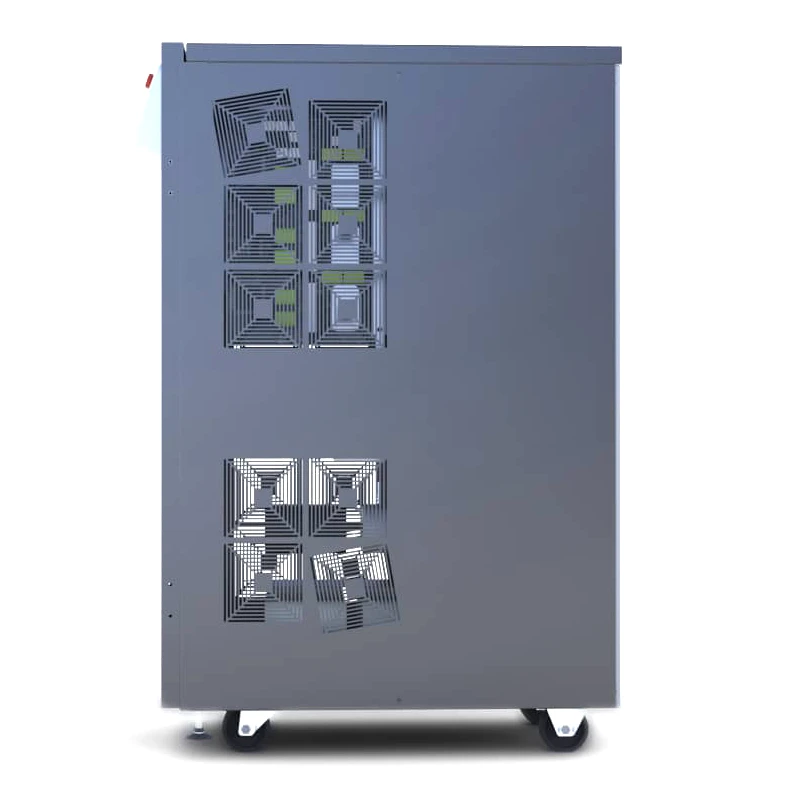
- Efficiency & cooling: = 92 % (40–200 kW); forced air cooling for thermally stable continuous load.
- Measurement parameters: mains U/I/P/f; output U/I/P (rms/avg), DC link, temperature monitoring; data logging via FTP.
- Standards & conformity: CE; safety EN-50178/EN-62040-1; EMC EN-62040-2; RoHS.
- Options: Battery emulation, PV emulation, insulation monitoring (IT grids), anti-islanding (grid-feeding), low-ripple capacitance, 30 kHz switching frequency (model-dependent).