#statusMessage#
Do you want to start the compare now?
#statusMessage#
Do you want to start the compare now?
How Thermography Enhances Manufacturing. Machine stoppages, component overheating, or electrical faults—unplanned downti...
Disturbances in the power grid often go unnoticed until systems shut down or equipment fails. Regular power quality asse...
In this practical checklist you will learn how to calibrate your measuring and test instruments effectively – simply, ef...
Modern oscilloscopes of the MXO Series from Rohde & Schwarz enable precise analysis and optimization of electric drivetr...
Manufacturer number: PQ112
| Weight (kg): | 4.36 |
|---|
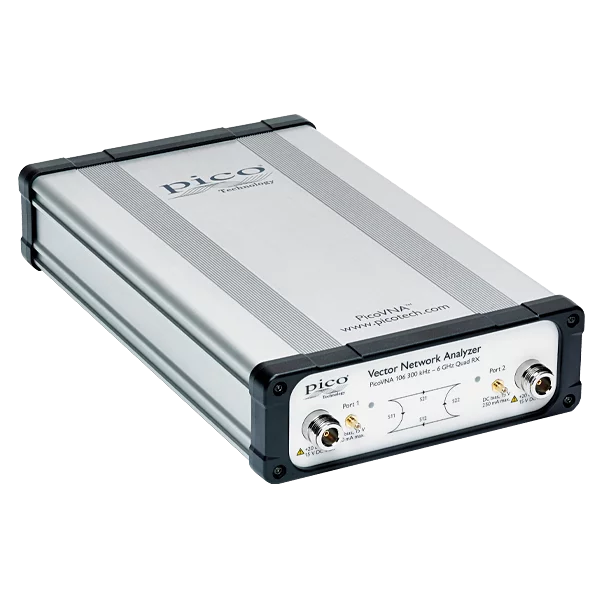
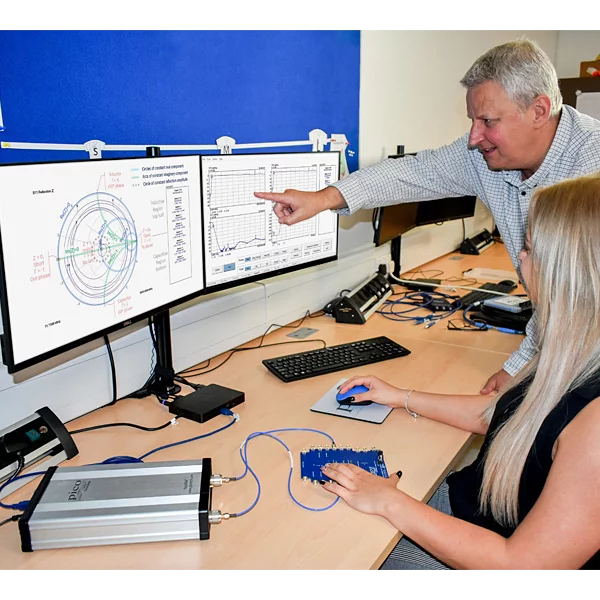
With the (VNA) vector network analyzer Pico VNA108 you have a handy device that offers very high accuracy at a very affordable price. The required area is slightly smaller than a DIN A4 page and is just 6 cm thick. This means that the VNA fits in every briefcase.
Vector network analyzers (VNA) are increasingly being used in many areas, in development, production and in the service area and increasingly also because of the low investment costs in training at universities and in the training of technicians. This device is used by engineers, technicians, experts, inspectors and teachers. The costs for the VNA108 compared to bench network analyzers are so low that it can also be purchased by amateurs as well as for laboratory applications by microwave experts.
With the VNAs, components such as B. amplifiers, circuits, modules and complete transmission system components from the telecommunications environment and for data transmission are examined. The measurements provide information about the linearity of components or modules and the individual frequency components of a signal can be recorded according to magnitude and phase, both on the input side and at the output of a module.
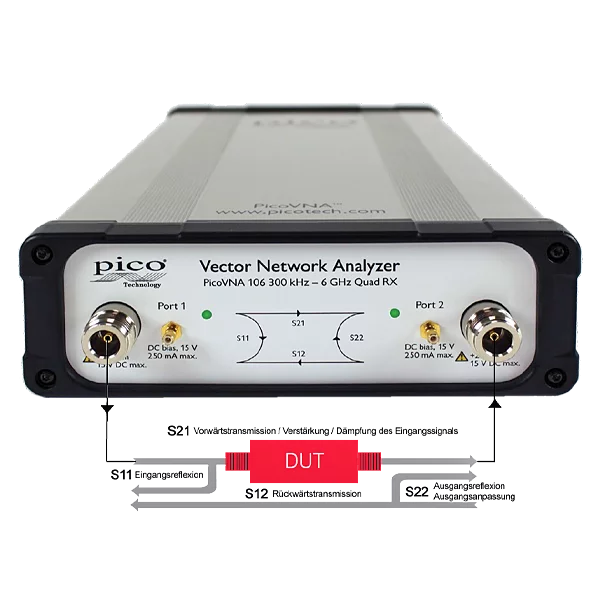
The S-parameters (scattering parameters) such as S11 (input reflection), S21 (forward transmission / amplification / attenuation of the input signal), S12 (backward transmission) and S22 (output reflection factor / output adaptation) can then be obtained automatically from these measurements.
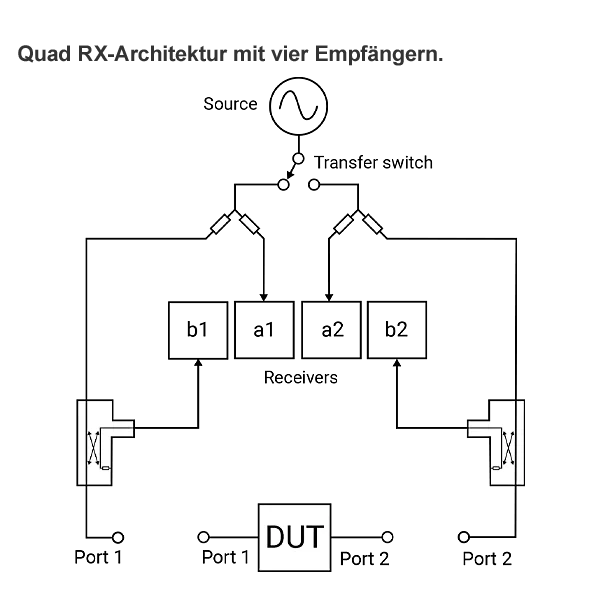
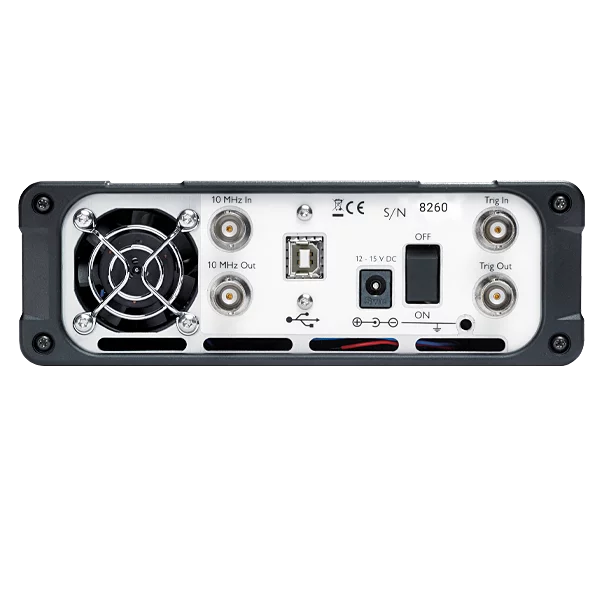
The PicoVNA 108 can be programmed and controlled via the USB interface. Despite its small size and low cost, the instrument has a four-receiver "Quad RX" architecture to avoid typical errors such as B. To eliminate signal delays (delays) of 3-receiver designs with internal switching paths.
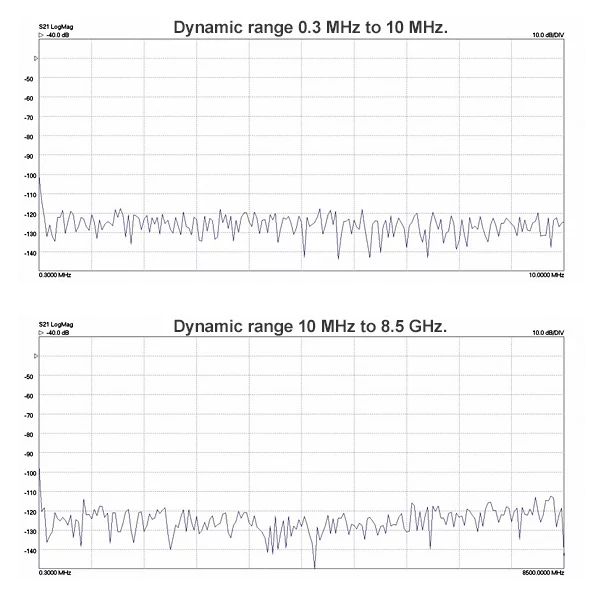
The PicoVNA 108 offers a dynamic range of 124 dB (at 10 Hz) with a maximum noise of 0.005 dB at the maximum bandwidth of 140 kHz. It is also possible to determine all four S-parameters at any frequency in just 190 µs (2-port measurement) - or to put it another way: 500 points in less than a tenth of a second.
Network analysis is used, for example, in stability tests, to characterize components or to measure the frequency respon...