
#statusMessage#
Do you want to start the comparison now?
From the camera to integration – this concise guide helps you select your FLIR thermal imaging camera so that you obtain the optimum solution for your measurement task. We are also available to support you with application-specific, practical configuration advice.
Recommended for:
Recommended for:
Note: The greater the requirements for flexibility, measurement accuracy and object variety, the more suitable the Axxx series is.
Note: Both variants can be configured in a Standard or Advanced version, depending on the required range of functions.
The choice of lens affects:
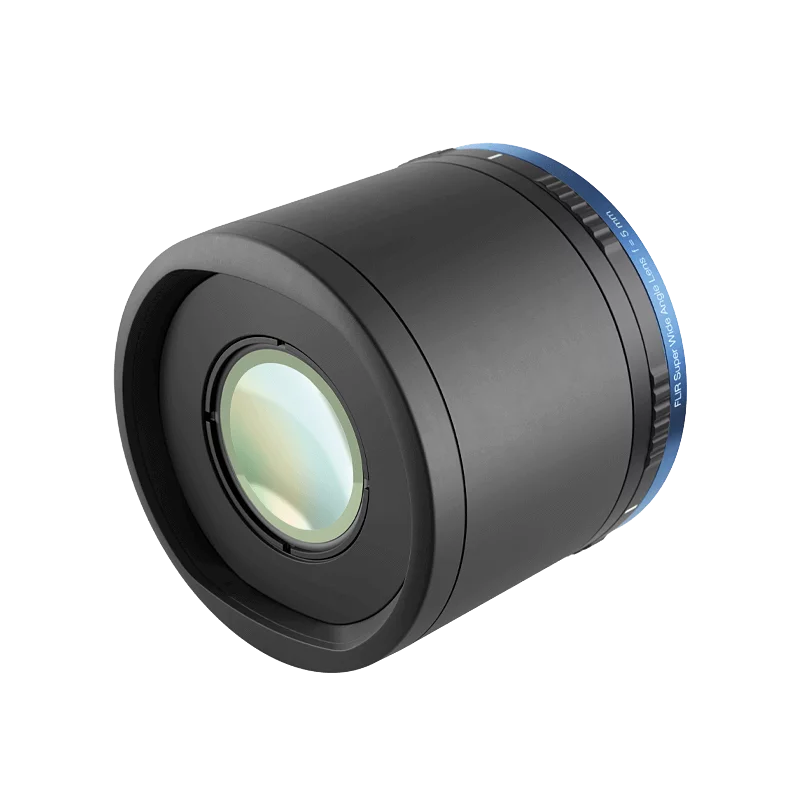
Wide-angle lens (e.g. 42°)
captures a wide field of view for imaging buildings, roofs, halls, conveyor belts or other areas where it is important to capture as much information as possible in a single image
Standard lens (e.g. 24°)
suitable for universal use in production environments, enables a safe working distance from live equipment (e.g. 3 m) and can still image smaller objects sharply
Telephoto lens (e.g. 14°)
captures distant objects or small details (e.g. defective components on power lines) with a narrow field of view for precise focusing and sharp images
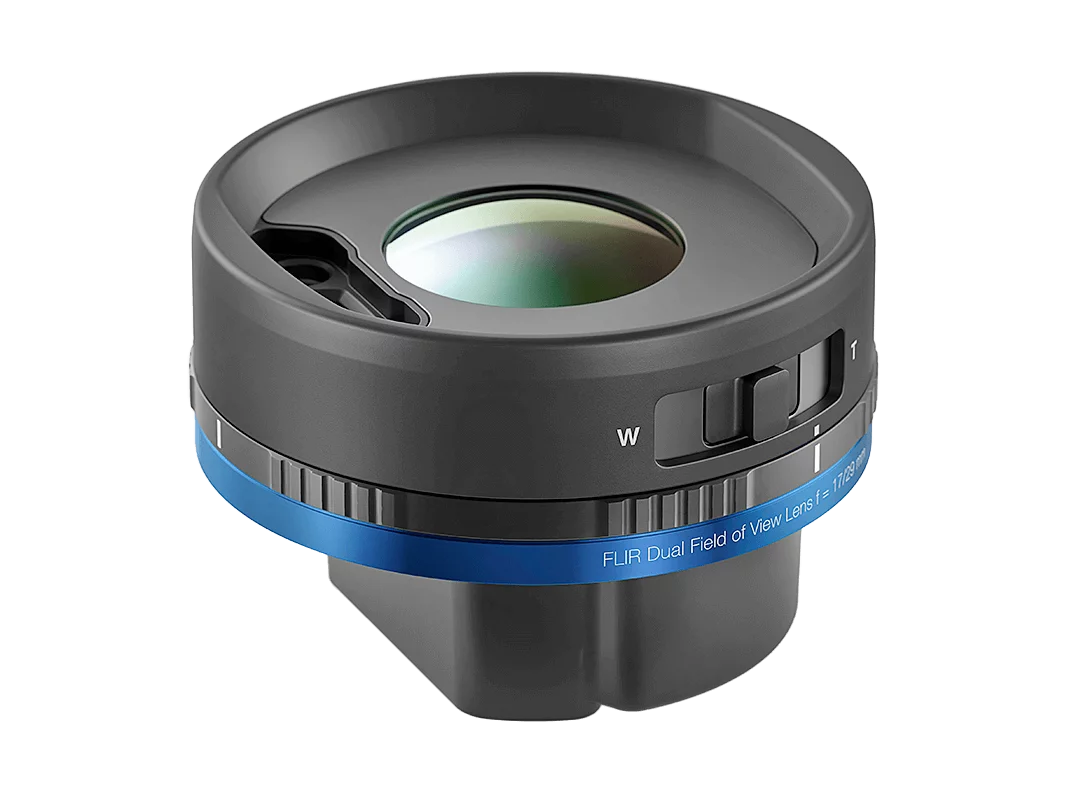
Dual FOV (FlexView™ DFOV)
with two switchable fields of view for overview and detailed analysis: wide-area scanning to detect potential anomalies or detailed inspection with greater optical zoom and higher resolution; switching is software-controlled
Practical tip: The smaller the target object or the greater the distance, the more suitable a lens with a narrow field of view (telephoto lens) is. The higher the resolution of the thermal imaging camera, the farther away the target object can be.
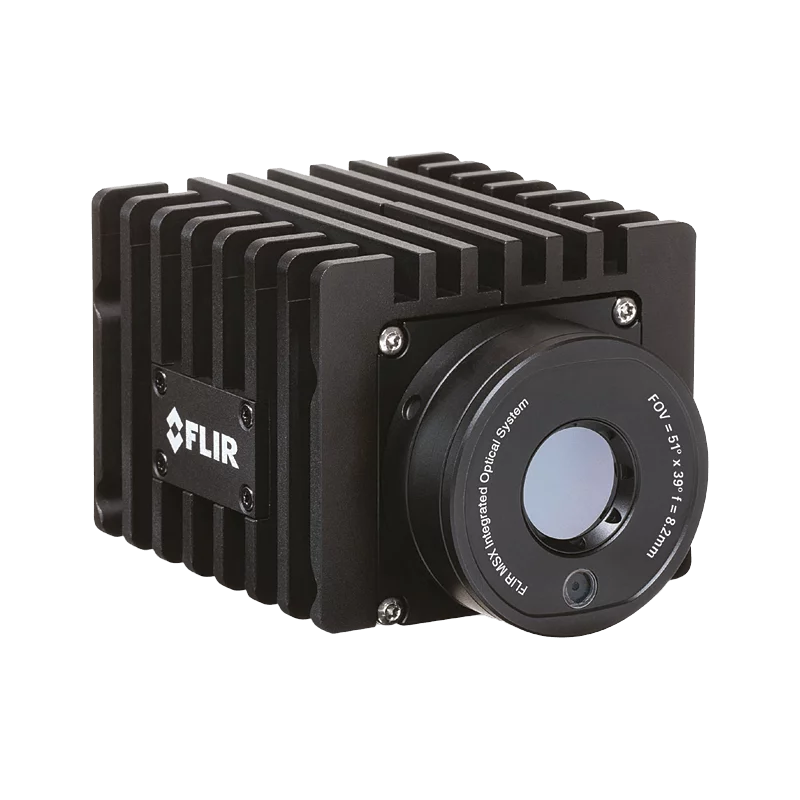
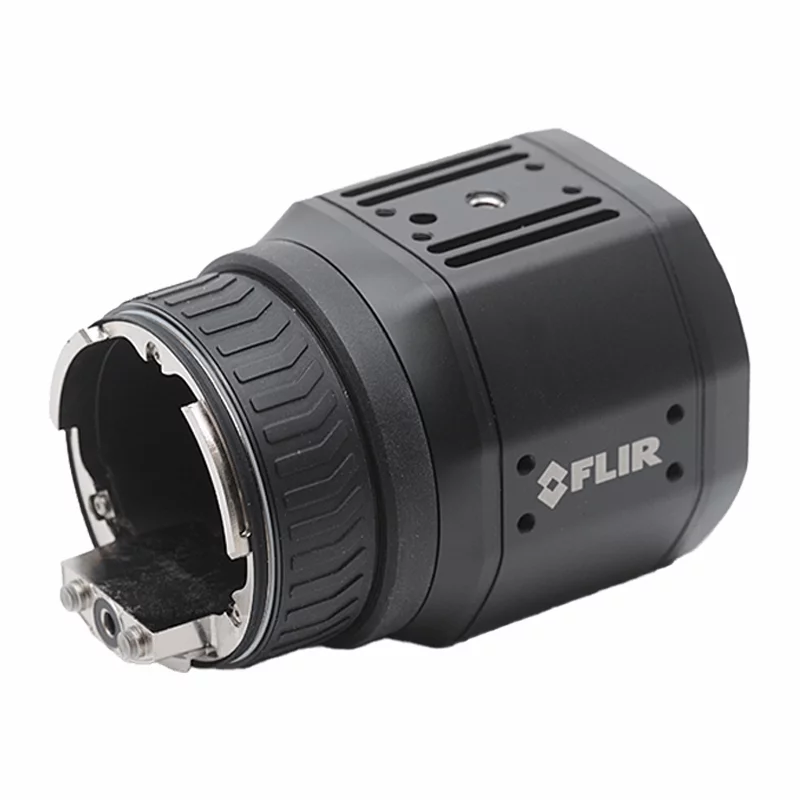
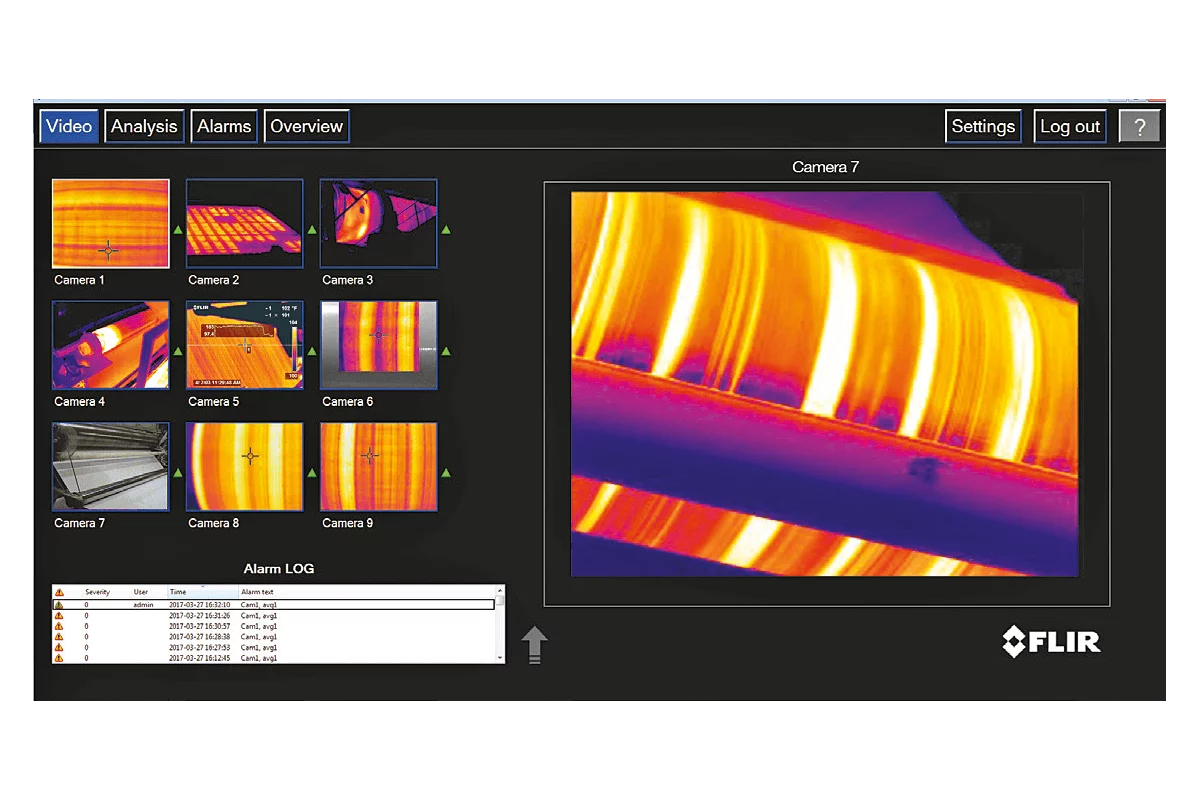
The fixed FLIR thermal imaging cameras with Smart Sensor functionality for automation can be easily integrated into the analysis software of your choice.
Examples:

.png "T300241")
.png "T300240")