
#statusMessage#
Do you want to start the comparison now?

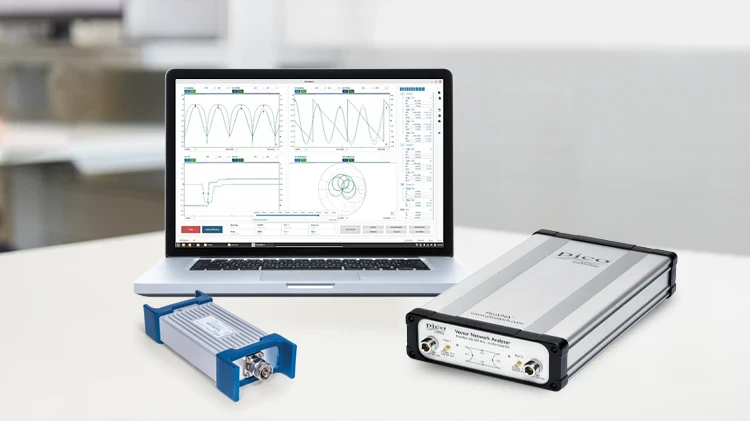
Vector network analysis from 300 kHz to 8.5 GHz: The PicoVNA series comprises three instruments for different requirements, from a portable reflectometer to a full two-port vector network analyzer.
For antenna tuning, cable testing and fault location – including outside the laboratory.
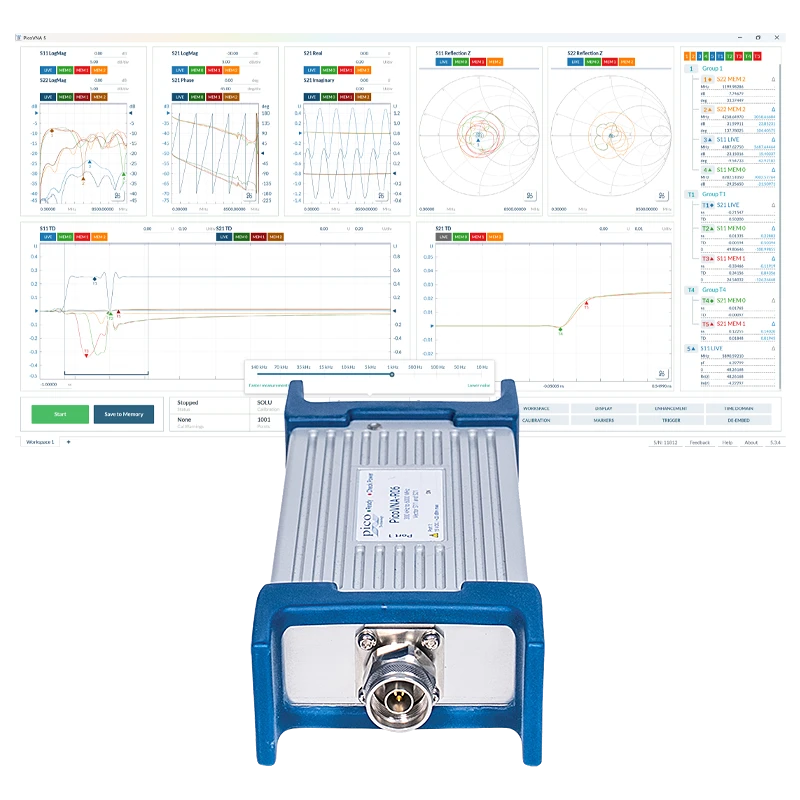
For applications requiring all four S-parameters, such as component characterization or de-embedding.
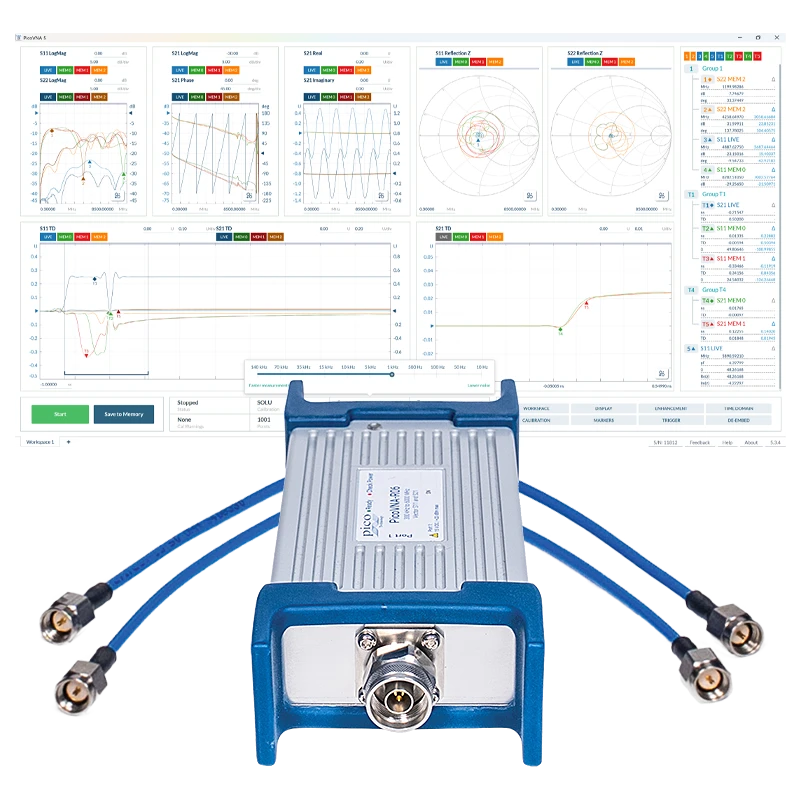
For applications up to 8.5 GHz and measurement tasks requiring a higher dynamic range or additional analysis functions. All PicoVNA 106 functions, plus:
The key difference is not just the frequency range.
The PicoVNA-R is designed for reflection measurements. It measures S11 with full one-port error correction and also S21 via port 2 with source-match correction, normalization and isolation. This makes it suitable for impedance matching measurements, impedance response measurements, fault location and estimating insertion loss.
By contrast, the PicoVNA 106 and 108 measure the complete set of S11, S21, S22 and S12. This is required when devices under test need to be fully characterized in both directions or when two-port de-embedding methods are used.
Learn more about fault location.
How can faults in cables and wiring be located precisely? Our Wiki article shows how TDR measurements are performed using a vector network analyzer and an oscilloscope, and explains the differences between the methods.
| Measurement Task | Suitable Model |
|---|---|
| On-site antenna tuning | PicoVNA-R |
| Laboratory antenna tuning | PicoVNA 106 or 108 |
| Field cable testing and fault location | PicoVNA-R |
| Full two-port characterization | PicoVNA 106 or 108 |
| Measurements above 6 GHz up to 8.5 GHz | PicoVNA 108 |
| Mixer and phase measurements | PicoVNA 108 |
| Automated test systems | PicoVNA-R, 106 or 108 |
All three instruments are controlled using PicoVNA 5. The software supports Windows, macOS and Linux and provides, among other features, frequency-domain and time-domain displays, various S-parameter displays, and API and SCPI interfaces for automation.
PicoVNA 5 can also be used in demo mode without a connected instrument. This allows users to familiarize themselves with the user interface and calibration procedures before purchasing an instrument. The software is included with every new PicoVNA, so measurements can begin immediately.
SCPI commands allow PicoVNA models to be integrated into existing test processes using the command set familiar to test system developers. This is the fastest approach when replacing an existing network analyzer or adopting an established test procedure. A separate API is also available for direct instrument access. It is designed for high data throughput, making it the appropriate choice for continuous measurement and analysis, such as in imaging techniques, radar applications or material property analysis. Programming examples are available for C, C++ and Python, among other languages, including examples for controlling multiple instruments from a single application.
The PicoVNA 5 demo mode enables initial software testing without a connected measurement instrument. Integration code can therefore be written and tested while the hardware is still being procured.
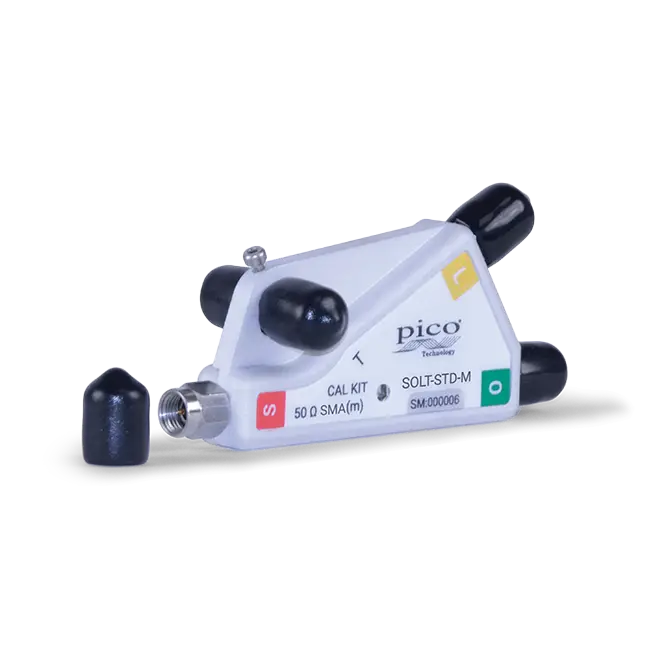
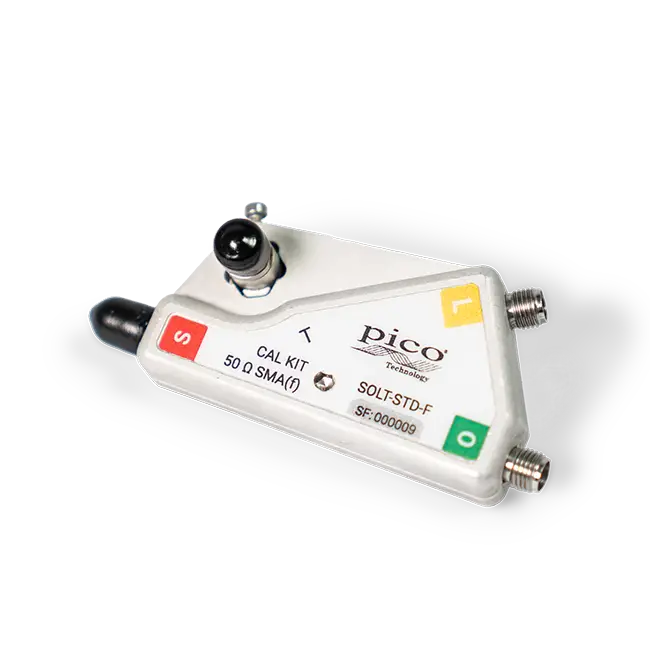
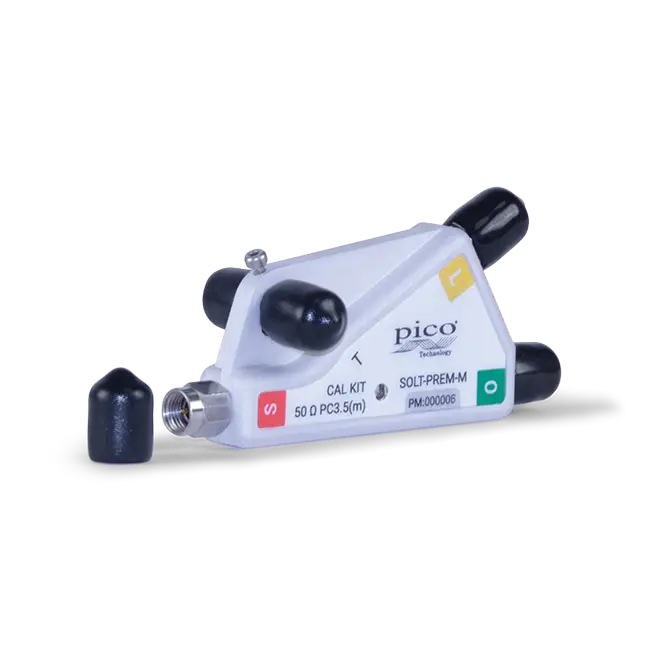
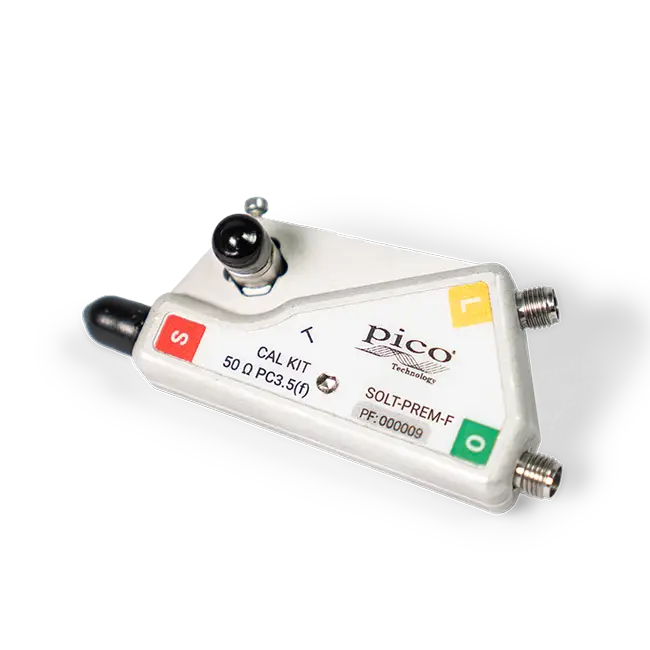
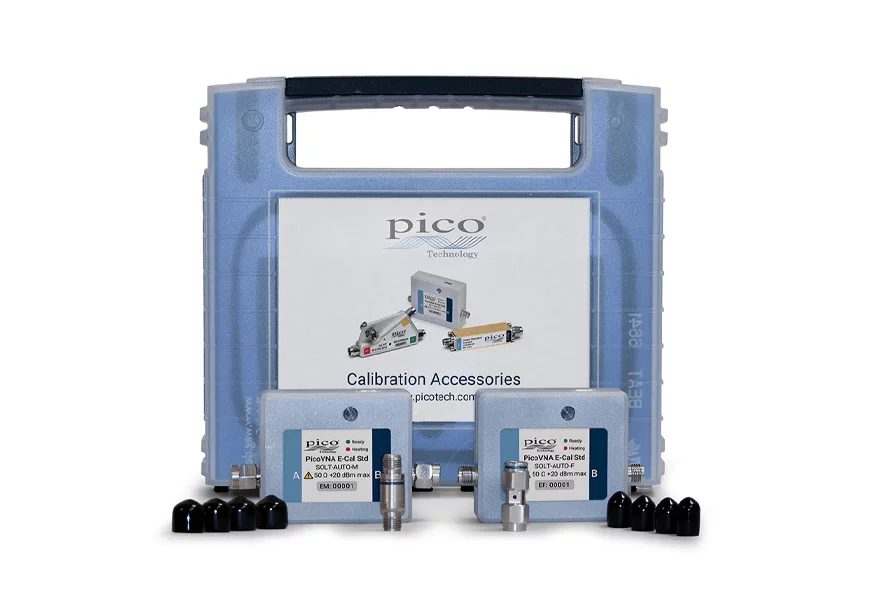
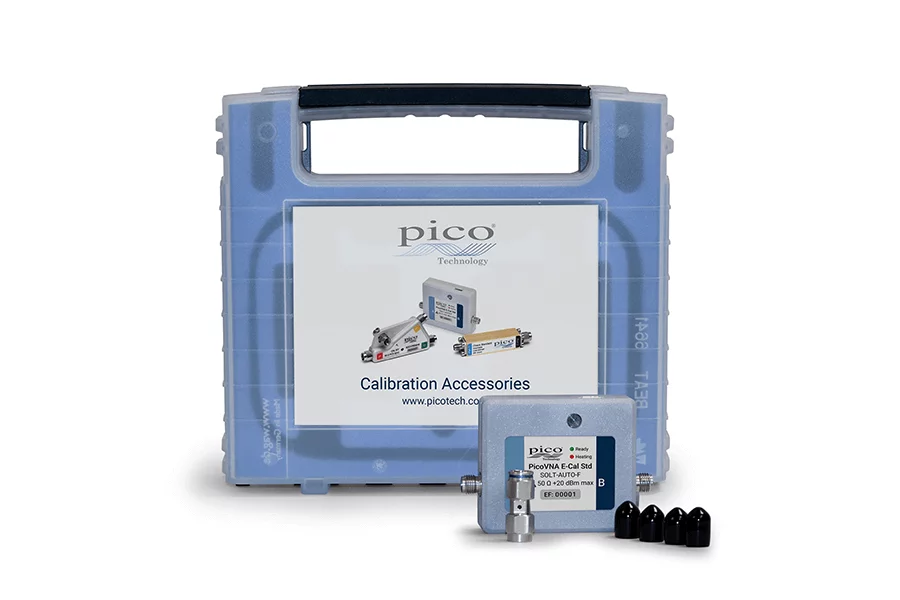
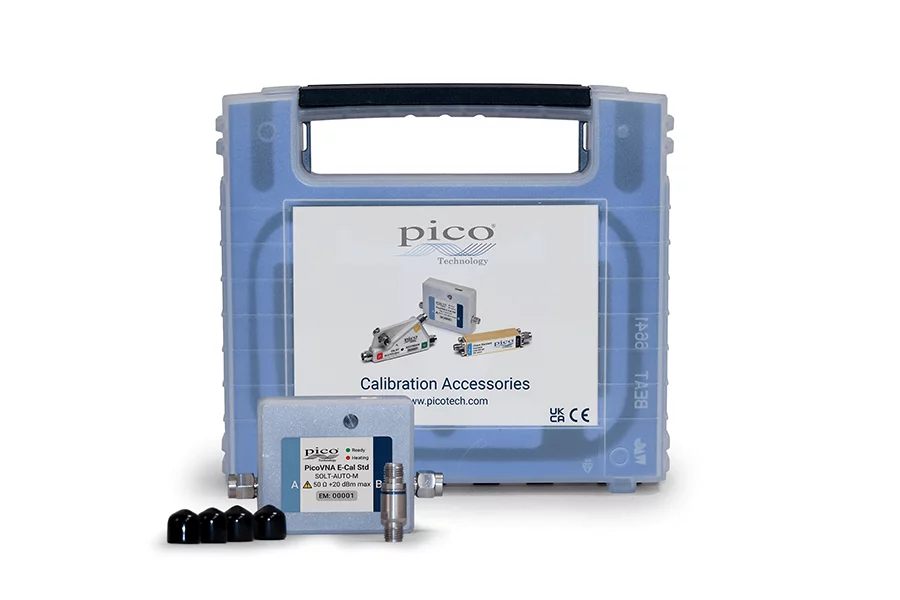
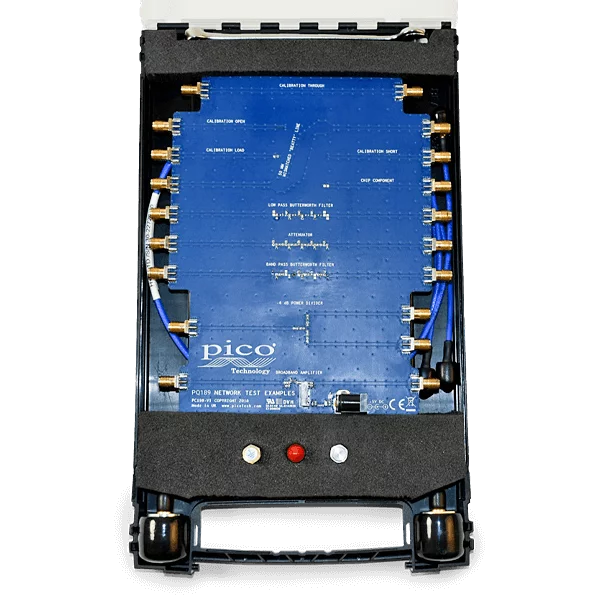
For reliable measurement results, the PicoVNA models support SOLT calibration. The PicoVNA 106 and 108 also support TRL and TRM methods for devices under test on substrates. Automated E-Cal modules reduce the procedure to a single connection. This saves time, minimizes wear on connectors with a limited number of mating cycles, and eliminates common handling errors from the procedure.
The PicoVNA-R also features an integrated calibrator with short, open and load standards. It does not replace calibration at the measurement plane, but compensates for temperature-related measurement deviations. A previously performed calibration can therefore continue to be used under changing ambient conditions.
Not sure whether a reflectometer is sufficient for your measurement task or whether a full two-port vector network analyzer is required? dataTec can help you select the appropriate instrument and accessories.
.png "USB vector network analyzer, 300 kHz to 6 GHz, Quad RX")